
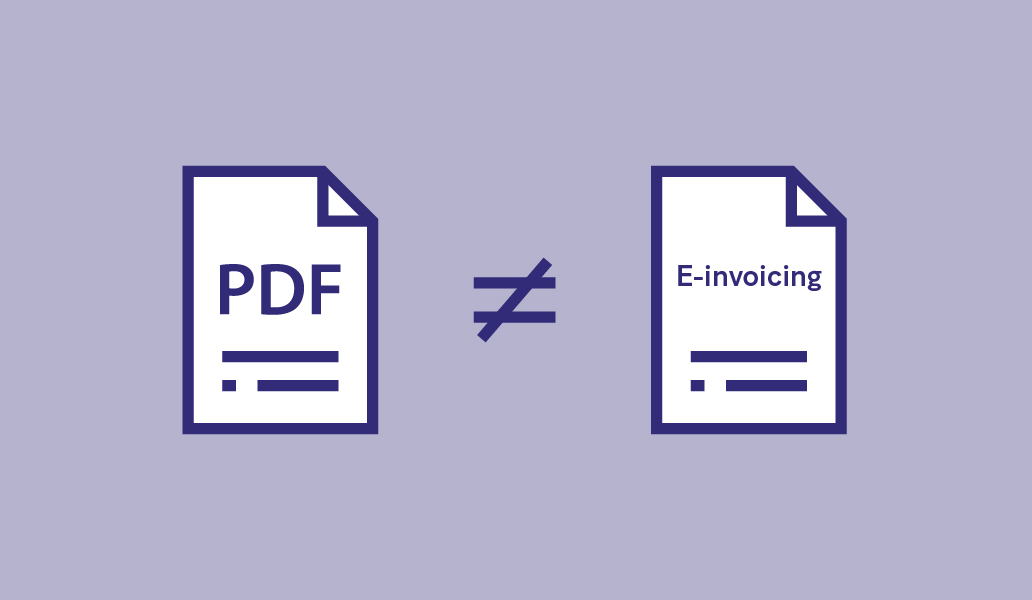
E-invoicing means sending invoices as structured digital files that another company's accounting system can read and process automatically, with no one typing anything in. It is not the same as emailing a PDF, and that distinction is about to matter a great deal in Malta.
Most Maltese businesses have heard that e-invoicing is coming, filed it under "2030," and moved on.
That's a mistake, and here's why.
What the MTCA has actually said
The Malta Tax and Customs Administration is not waiting quietly for an EU deadline. Its own guidance confirms it is actively studying the implementation of e-invoicing and digital real-time reporting as part of its 2023–2025 Strategic Plan, assessing the technical, legal and operational requirements to align with Council Directive (EU) 2025/516.
MTCA Commissioner Joseph Caruana has gone further, announcing that the administration intends to accelerate its plans for mandatory e-invoicing and real-time reporting nationwide.
The reason is a number that should concern anyone who deals with Maltese VAT. Malta's VAT gap sits at 24.2%. The EU average is 9.5%. Only Romania has a wider gap in the EU.
A VAT gap that size makes real-time reporting less of a policy ambition and more of a revenue necessity. When a government is losing roughly a quarter of the VAT it should be collecting, systems that show transactions as they happen stop being optional.
Why 2030 is the wrong date to plan around
Under the EU's VAT in the Digital Age (ViDA) package, e-invoicing and digital reporting become mandatory for intra-community B2B transactions from 1 July 2030. That is the date most businesses have written down.
But the rules changed underneath it.
Until April 2025, a member state that wanted to make domestic B2B e-invoicing compulsory had to ask the European Commission for permission first. Since 14 April 2025, it doesn't. Member states can now introduce mandatory domestic B2B e-invoicing, and remove the requirement for the buyer to agree, without prior approval.
The practical effect across Europe has been immediate. National mandates are now moving on their own accelerated timetables rather than all converging on 2030. Malta's stated intention to accelerate has to be read in that context.
No official Maltese implementation date has been published yet. But "no date yet" and "years away" are not the same thing. When the timeline is announced, businesses running on spreadsheets, PDF invoices or a legacy accounting package will be given months, not years.
What e-invoicing in Malta looks like today
The current position is worth understanding, because it explains where things are heading.
Malta has no e-invoicing mandate for B2B, B2G or B2C transactions. Businesses can issue electronic invoices voluntarily where both parties agree.
Public authorities, however, must already be able to receive and process e-invoices that comply with European standard EN 16931. This came in through Legal Notices 403 and 404 of 2018. Malta chose to build this on the Peppol network using Peppol BIS Billing 3.0, rather than a centralised national platform.
That last decision matters more than it sounds. Malta has already picked its infrastructure. When a mandate arrives, it is very likely to run on Peppol, which means businesses that get onto Peppol now are building toward the actual requirement rather than guessing.
Two other technical points worth knowing: the final version of the European standard, EN 16931-1:2026, was published in March 2026. And the underlying EU directive Malta is aligning to is Council Directive (EU) 2025/516.
A PDF emailed to a client is not an e-invoice
This is the single most common misunderstanding, and it's worth being blunt about.
An e-invoice is a structured data file that conforms to EN 16931 and can be issued, transmitted and processed automatically by another system. A PDF attached to an email is a picture of an invoice. A human has to read it and type it in somewhere.
If your current process is "generate PDF, attach to email, send," you do not have e-invoicing. You have email.
The risk nobody's talking about: your data goes straight to the tax authority
Most coverage of e-invoicing frames it as a finance department problem. It isn't.
Under real-time reporting, every invoice has to carry the correct VAT treatment, including place of supply and the applicable rate or exemption. That data is transmitted directly to the MTCA as the transaction happens.
Which means any mismatch between how your contracts describe a transaction, how your VAT classification treats it, and how your ERP system is configured, gets sent straight to the tax authority. In real time. Without a human checking it first.
Today, those inconsistencies surface at year end, when there's time to correct them. Under real-time reporting, they surface immediately, at scale, and they're already in the MTCA's hands.
This is why e-investing readiness is really an ERP configuration question, not an invoicing question. Your system has to be right before the data starts flowing.
How to prepare, in practical order
1. Audit where your invoice data actually lives. If invoices are produced in one system, VAT is calculated in another, and the two are reconciled in a spreadsheet, that's the problem to fix first.
2. Check your VAT configuration properly. Place of supply rules, exemption codes, reverse charge treatment. Get these right while errors are still cheap.
3. Get onto Peppol before you're required to. Voluntary adoption gives you time to find the problems in a low-stakes environment. Mandated adoption doesn't.
4. Confirm your software will actually be compliant. Ask your provider directly whether it supports EN 16931 and Peppol BIS Billing 3.0 today, not whether it's "on the roadmap."
Where Odoo fits
This is the part where businesses on modern ERP have a genuine head start.
Odoo is a registered Peppol Access Point and Service Metadata Publisher. It sends and receives structured XML invoices directly over the Peppol network, with no email or post involved, and it supports Peppol BIS Billing 3.0 along with national formats used elsewhere in Europe. Incoming documents are pulled from the network automatically and turned into draft vendor bills, which removes the manual data entry that causes most invoice errors in the first place.
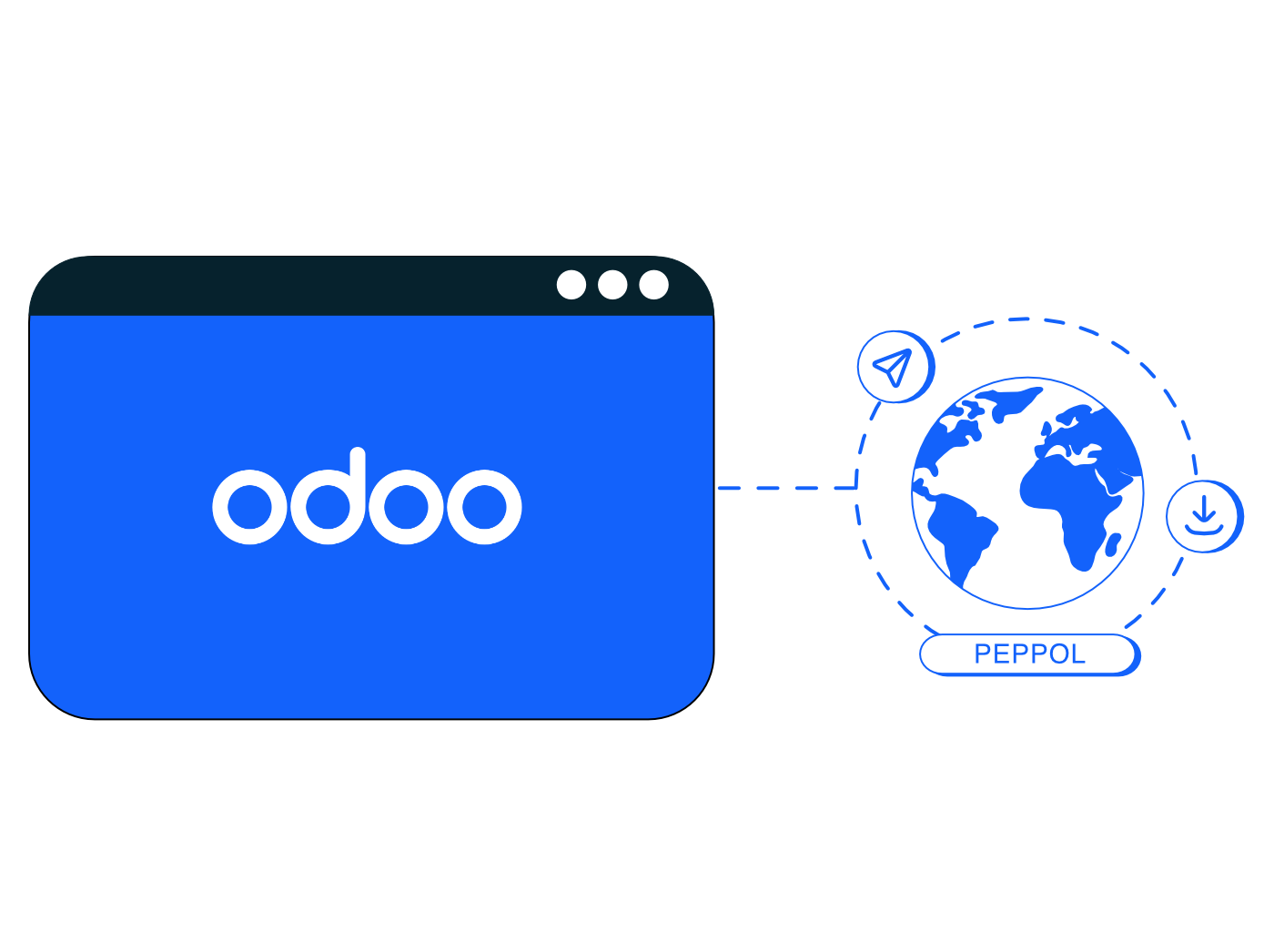
Odoo has operated as a Peppol Access Point for around two years, and the service is free to use for sending and receiving across Europe.
For a Maltese business, that means compliance readiness is a configuration exercise rather than a software replacement project. The infrastructure is already there.
There's also a funding angle. The Digitalise Your SME scheme is currently open, and ERP investment of this kind is exactly what it's designed to part-finance. Getting compliance-ready and getting part-funded for it are not separate projects.
Frequently asked questions
Is e-invoicing mandatory in Malta? Not yet. There is currently no mandate for B2B, B2G or B2C e-invoicing in Malta. Public authorities must be able to receive EN 16931-compliant e-invoices, but suppliers are not obliged to issue them.
When will e-invoicing become mandatory in Malta? No official date has been announced. The MTCA has stated it intends to accelerate implementation, and full EU requirements under ViDA apply to intra-community B2B transactions from 1 July 2030. A domestic Maltese mandate could well arrive before that.
What is ViDA? VAT in the Digital Age, the EU package that standardises e-invoicing and digital real-time reporting across member states, implemented through Council Directive (EU) 2025/516.
What is Peppol? The network Malta has adopted for exchanging electronic invoices. Businesses connect through an Access Point to send and receive structured invoices with other organisations across Europe.
Does an emailed PDF count as an e-invoice? No. An e-invoice must be a structured, machine-readable file meeting EN 16931. A PDF is not machine-readable in that sense.
The bottom line
Nobody knows exactly when Malta will announce its e-invoicing timeline. What we do know is that the tax administration has said it wants to move faster, the EU has removed the barrier that used to slow national mandates down, and Malta's VAT gap gives the government a strong reason to act.
Businesses that prepare now will treat the announcement as a configuration change. Businesses that wait will treat it as an emergency.
Talk to Centric about getting your systems e-invoicing ready. As an Odoo Silver Partner in Malta, we help businesses configure Odoo for Peppol, get their VAT treatment right at source, and prepare for digital reporting before it becomes compulsory.